How to Pay for Cointraffic Ads With Crypto Without the 24-Hour Wait
Cointraffic already takes cryptocurrency. That is worth saying up front, because most guides about paying ad networks with crypto start from the premise that the network refuses it, and here that premise is simply false.
So this is not an article about getting around a restriction. It is about timing, and about what to do when the crypto route is the slow one.
What Cointraffic actually accepts
Three things, in their own words: bank wire, credit cards, and cryptocurrency processed through CoinGate.
Those three are not equivalent. A bank wire is the slowest and needs a bank account in the first place. A crypto deposit through CoinGate works, but it is processed as a separate payment order, and advertisers report it taking up to a day to show on the balance. A card payment is the only one of the three that credits the balance immediately.
That difference matters more than it sounds. Media buying runs on timing. A creative gets approved, a placement opens up, a competitor pauses, and the window is open now, not tomorrow afternoon.
The gap this leaves
If your working capital sits in USDT, you have two unattractive options. Send the crypto to CoinGate and wait, or find a card.
Finding a card is where it usually falls apart. Plenty of advertisers in this industry have no bank card they can use for ad spend. Cards get declined for advertising routinely, business cards are tied to entities that do not exist yet, and in several countries a local card simply will not clear an international ad platform.
The card route, funded with crypto
A virtual card closes the gap from the other side. You keep holding crypto, and the card is what Cointraffic sees.
The flow is short:
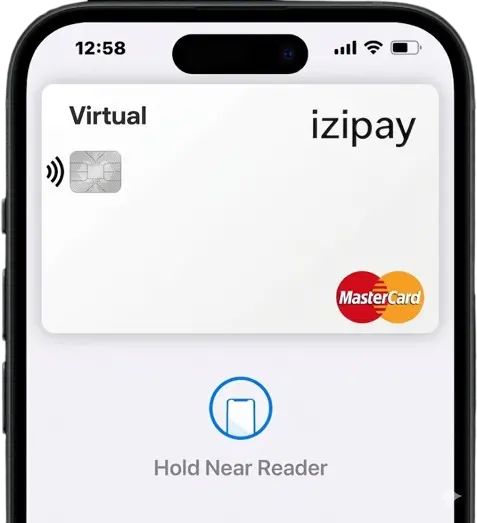
USDT or Bitcoin to an IZIPAY card to the Cointraffic balance
The card is an ordinary Visa or Mastercard as far as the ad network is concerned. There is no crypto anywhere in the payment it processes, so there is nothing unusual for their billing to reject, and the deposit is credited the moment it goes through.
Setting it up
Issue the card. It takes about two minutes on the virtual card page. No bank account, no document upload.
Top it up with crypto. USDT on Tron is the cheapest network to send on. Bitcoin, USDC, ETH, BNB, SOL and TRX all work. Fees are listed on the pricing page.
Leave a buffer. Cointraffic bills in euro and the card is a dollar card, so the charge is converted at the time of payment. Top up a few per cent above the deposit you intend to make, otherwise a rate move turns a clean deposit into a decline.
Make the deposit. In your Cointraffic advertiser account, open the balance top-up, choose the card option, and enter the card. The balance moves straight away.
The short version of this, with the current fees, lives on our Cointraffic page.
What it costs
The card is a one-off charge, from $49.99, with no monthly fee. On top of that there is a small percentage when you load crypto onto it, which is where the network fee for the chain you chose also lands.
Against a Cointraffic deposit of any meaningful size, that cost is a rounding error. Against a hundred-euro test it is not, which is worth knowing before you issue a card for a single small deposit.
Where this does not help
Two honest limits.
If you are depositing a large amount once a quarter and the timing does not matter to you, the CoinGate route is fine and cheaper. Use it. The card earns its place when you are topping up often, or when the deposit needs to clear now.
And a card does not change Cointraffic's own rules. Campaign approval, minimum budgets and their publisher requirements are theirs, and funding the balance faster does not move any of them.
The same problem elsewhere
Crypto advertisers hit the same wall across the rest of the stack. We have written up paying Taboola ad spend with crypto, and the full list of platforms people fund with these cards covers most of the mainstream networks as well as the crypto-native ones.