The UK is one of the harder markets for crypto cards. Several programs that used to serve British customers have shut down or paused, the ones that remain sit behind full verification and FCA marketing rules, and banks are quick to block transfers to exchanges. At the same time, British users are among the most active crypto spenders in Europe, and most of that spending happens online: subscriptions, flights, software, ads.
This guide separates what actually works in 2026 into two groups: regulated exchange cards for people who are happy to verify, and no-KYC virtual cards for people who want a card today, without an application, a review or a bank link.
Exchange cards available to UK residents
A handful of exchanges issue cards to UK customers. The pattern is the same across all of them: a UK address, a passport or driving licence, a selfie, source-of-funds questions for larger balances, and a card that spends your exchange balance by selling crypto at the moment of purchase. Rewards exist on higher tiers, sometimes with a staking requirement. Expect a review that takes days and the possibility of being asked for more documents later.
What these cards are good at: everyday spending of a portfolio you already keep on the exchange, physical cards for in-store use, and chargeback protection through a UK-regulated issuer.
What they are not good at: privacy, multiple cards, spending without creating a taxable disposal on each purchase, and availability if the exchange decides your risk profile does not fit.
Why UK users look for a no-KYC crypto card
- Speed. A virtual card is issued in about two minutes instead of after a review.
- No bank link. Your high-street bank never sees a crypto transaction, which avoids the account reviews that follow exchange transfers.
- Subscriptions. AI tools, US services and streaming plans that decline UK cards or ask for a US billing address work with a US-BIN card.
- Separate cards for separate things. One card per subscription, one per ad account, one for travel. Freeze a card to stop a service.
- Stablecoin spending. Sending USDT to a card and spending it is not a sale of appreciated crypto.
What IZIPAY offers in the UK
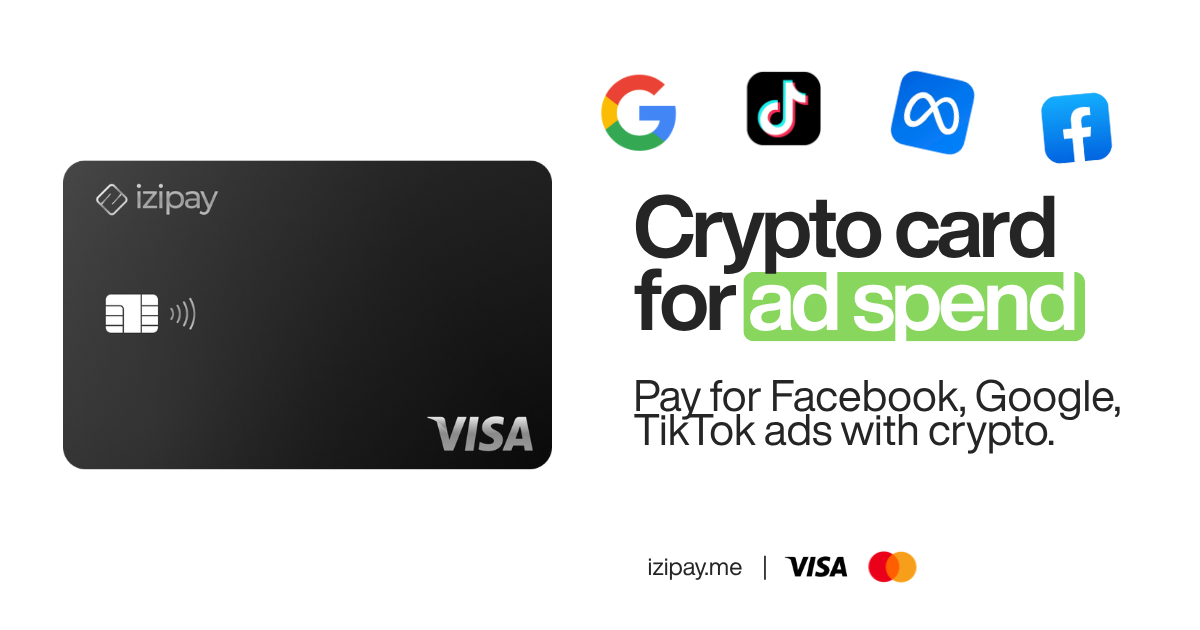
- Virtual Visa and Mastercard with a US BIN, $49.99 one-time, no monthly fee, ready in about two minutes after an email signup.
- A physical metal card shipped to UK addresses for ATMs and shops.
- Top-ups in USDT on TRC20, ERC20, BSC, Polygon and Solana, plus BTC and USDC, 3% fee.
- Apple Pay and Google Pay on the Mastercard.
- 3-D Secure codes in your dashboard, so UK merchants that require verification work.
See the virtual card, the physical card and pricing.
Fees compared for a UK user
Card payments in pounds on a USD card carry a currency conversion, usually the card network rate plus a small margin. For UK merchants that price in GBP this is the main cost to plan for. For everything priced in dollars, which is most of what people use a crypto card for in the UK (software, US services, ads, flights booked in USD), there is no conversion at all.
Exchange cards avoid the GBP conversion but charge a spread when they sell your crypto at checkout. A no-KYC card charges 3% at top-up and nothing per purchase. If you reload once a month and spend mostly in USD, the flat top-up fee is usually cheaper.
Tax in the UK
HMRC treats spending crypto as a disposal for capital gains purposes. Spending USDT bought at par has no gain. The issuer of the card does not change this, and a no-KYC issuer does not report to HMRC; keeping records is on you.
Getting a crypto card in the UK in five minutes
- Register with an email.
- Choose a virtual Visa or Mastercard and pay in crypto.
- Open the card in your dashboard and add it to Apple Pay or Google Pay.
- Send USDT (TRC20 is the cheapest network) to your personal top-up address.
- Use United States as the billing country for US-priced services.