Singapore is unusual: crypto is legal, well regulated by the Monetary Authority of Singapore, and widely held, yet spending it with a card is still awkward. The licensed programs are few, they require full identity verification and a Singapore address, and expats on passes often fail the residency checks. That is why a large share of crypto spending by Singapore residents happens through virtual cards that are funded directly with stablecoins.
This guide lists what actually works in 2026, what each option costs, and how to decide between a licensed exchange card and a no-KYC virtual card.
Licensed exchange cards in Singapore
A small number of MAS-licensed exchanges issue cards to Singapore residents. They work like any Visa prepaid or debit card: you verify with NRIC or passport and proof of address, the card spends your exchange balance, and some tiers offer cashback or airport lounge access if you stake the exchange token. Physical cards are available and work at local PayNow-free terminals, MRT gates through Apple Pay and abroad.
Where they fall short: expats on employment or dependant passes are sometimes rejected, applications can take days, one card per person, and every purchase is a conversion at the exchange's rate. Balances can also be frozen during a compliance review of the account.
Why Singapore users choose a no-KYC virtual card
- Ready in two minutes with an email address, no NRIC, no pass type questions.
- No bank link, so local banks never see crypto activity.
- US-BIN card for services that decline Singapore cards or require a US billing address, including many AI tools and streaming plans.
- Multiple cards: one per subscription, one per ad account, one for travel.
- Spending USDT directly rather than selling coins at each purchase.
What IZIPAY offers in Singapore
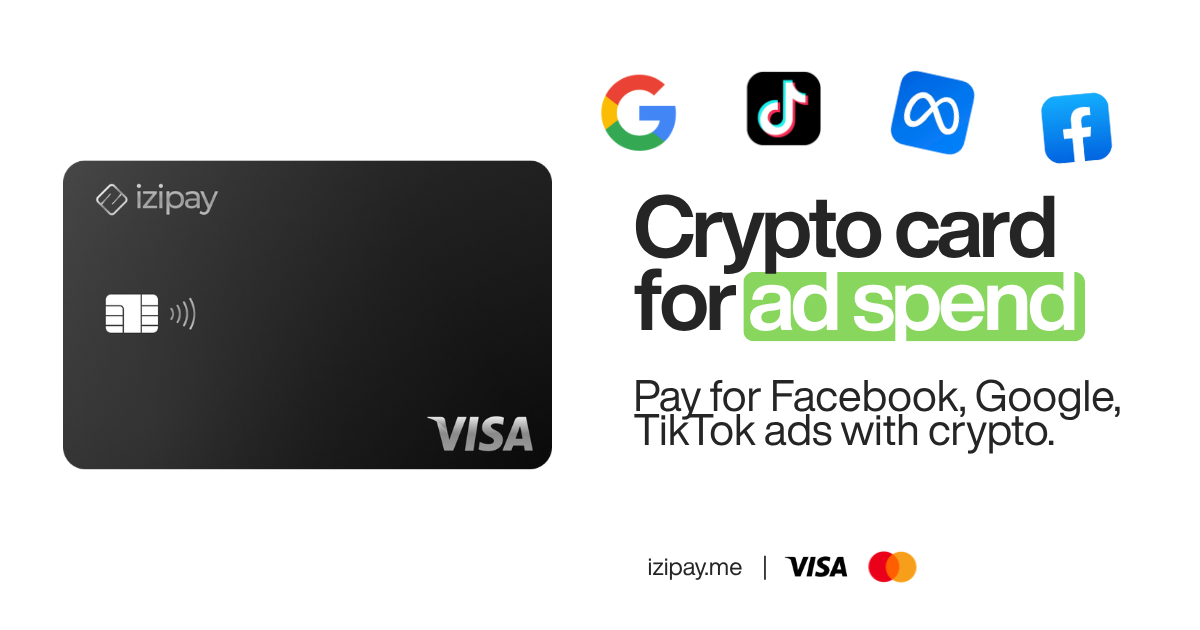
- Virtual Visa and Mastercard with a US BIN, $49.99 one-time, no monthly fee.
- Physical metal card shipped to Singapore for ATMs and in-store use.
- Top-ups in USDT on TRC20, ERC20, BSC, Polygon and Solana, plus BTC and USDC, 3% fee.
- Apple Pay and Google Pay on the Mastercard, which also covers MRT and bus gates.
- 3-D Secure codes delivered to your dashboard.
See the virtual card, the physical card and pricing.
Fees for a Singapore user
Payments in Singapore dollars on a USD card carry the network conversion rate plus a small margin, so for daily SGD spending a licensed local card can be cheaper. For USD-priced services, which is where most Singapore crypto spending goes (software, US subscriptions, flights and hotels booked in USD, advertising), a no-KYC card has no conversion at all, only the 3% top-up fee.
Regulation and tax
Using a crypto-funded card is legal for individuals in Singapore. There is no capital gains tax for individuals, which makes card spending simple: no disposal calculations, no reporting for personal use. Businesses that use crypto cards should treat purchases like any other expense in their books.
How to get a crypto card in Singapore in five minutes
- Register with an email.
- Choose Visa or Mastercard and pay in crypto.
- Open the card in the dashboard and add it to Apple Pay or Google Pay.
- Send USDT (TRC20 is the cheapest) to your top-up address.
- Use United States as the billing country for US-priced services, Singapore for local merchants.