Plenty of online purchases are perfectly legitimate yet still feel personal. A VPN subscription, a creator membership, an AI tool, a dating app, a gaming top-up, or a niche digital service can all end up mixed into the same financial trail as your rent, groceries, and family spending. Pay for them with your main bank card and every one of those merchants lands on the statement your partner, accountant, or bank sees.
A crypto debit card for private spending solves that with separation, not secrecy. The idea is simple: keep one card for everyday banking and a second, crypto-funded card for the online purchases you would rather keep off your primary statement. This guide explains how that separation works, why bank statements expose more than most people expect, and how to set up a private spending card the right way.
Why Financial Privacy Matters
Wanting privacy is not the same as hiding something. Most people who use a dedicated private spending card are simply after cleaner records and better control:
- Cleaner bank statements. Discretionary purchases stay off your main debit card history, so your primary account reads like an operating account rather than a diary.
- Better spending separation. Subscriptions, creator payments, tools, and entertainment live in their own budget silo instead of blurring into core monthly expenses.
- Less merchant exposure. Your household bank account does not have to be the payment source for every online service you sign up to.
- Stronger digital hygiene. A dedicated card is easy to track, cap, and replace without disrupting the card you rely on for rent and bills.
How a Crypto Debit Card Keeps Purchases Private
A crypto card for private spending works by changing the payment path. Instead of paying a merchant directly with the card tied to your checking account, you fund a separate spending balance first, then pay online with that dedicated card.
That distinction is the whole point. Your bank may still see that you moved money out of your account, but the merchant-level transaction is handled through the separate card rather than appearing as a direct purchase on your everyday statement. For anyone who cares about crypto card privacy, that extra layer of separation is the main benefit.
It also helps with budgeting. Many people do not only want privacy, they want limits. A dedicated card lets you cap discretionary categories, isolate renewals, and stop personal subscriptions from creeping into essential spending.
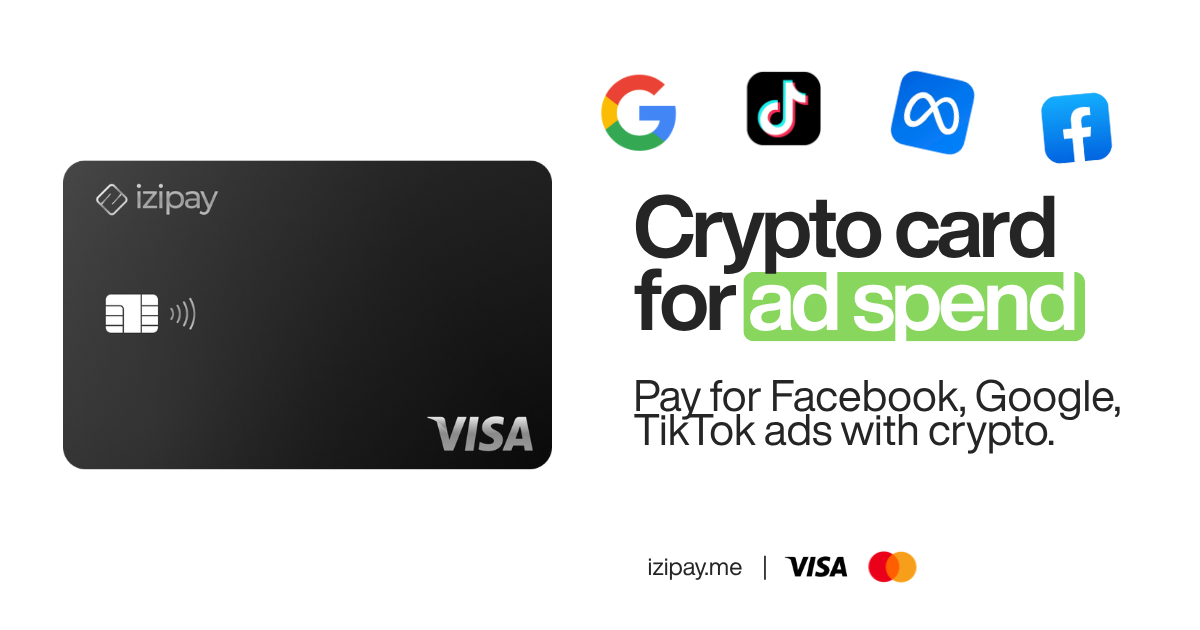
With IZIPAY, the private card is a no-KYC virtual Visa. There is no identity verification wall to open one, so the card is not linked back to your name through a lengthy onboarding process. You fund it with USDT, USDC, or BTC, and it runs on premium Visa BINs that clear normal online checkouts, including Stripe-powered stores. There is $0 monthly fee, a flat 3% top-up fee, and the card adds to Apple Pay and Google Pay for in-app and in-person payments.
Why Bank Statements Expose Your Spending
Traditional bank cards are convenient, but they were never designed around discretion. Every merchant descriptor, authorization, and recurring renewal accumulates into a visible spending pattern over time. That becomes friction when you share finances with a partner, review accounts with an accountant, manage business reimbursements, or just want a clean read on your primary budget.
The problem is not that private spending is wrong. It is that standard banking tools are built for full transparency inside one central account. If you want a layer between your main bank and selected merchants, a dedicated private spending card gives you control over how those purchases are organized. Think of the crypto-funded card as a financial silo: your bank account stays your core operating account, while the separate card becomes the home for chosen digital purchases and subscriptions.
How to Set Up a Crypto Card for Private Spending
1. Open a dedicated card for online purchases
Start with a separate virtual card rather than reusing your daily bank card. A dedicated setup is what makes privacy, budgeting, and merchant separation possible in the first place. On IZIPAY you can spin up a virtual debit card with no KYC and keep it fully distinct from your primary banking.
2. Fund the card with crypto
Move funds into the card balance using supported assets such as USDT, USDC, or BTC. Funding with crypto is what turns the card into a bridge between your digital assets and everyday merchants, while keeping purchases separate from your main bank card. IZIPAY charges a flat 3% on top-ups and no monthly fee, so an idle card costs you nothing.
3. Use the card only for selected categories
For the strongest privacy benefit, reserve this card for the categories you want kept apart from household or work expenses: privacy tools, digital creators, subscriptions, experimental software, gaming, or one-off online services. The narrower the card's job, the cleaner the separation.
4. Review, rotate, and control your spending
Top up deliberately instead of leaving a large standing balance. That makes the card easier to manage and curbs subscription drift. If a merchant becomes inactive or suspicious, you can rotate to fresh card details without touching your primary bank card.
Best Use Cases for a Private Crypto Payment Card
A crypto debit card for private spending is most useful when you want cleaner separation, not when you are overcomplicating routine payments. The strongest use cases are legitimate but personal:
- Privacy tools. VPNs, secure email, and password managers are classic services users prefer to keep on a separate rail.
- Digital subscriptions. Streaming add-ons, creator memberships, AI platforms, and smaller software tools are easier to manage outside your main statement.
- Gaming and entertainment. Game stores, in-app purchases, and top-ups can sit in one controlled bucket.
- Testing new services. Trying an unfamiliar merchant with a dedicated card means your everyday bank card never touches an untested checkout.
Because IZIPAY's BINs clear mainstream processors, the card works at the same everyday merchants a normal Visa would, so the privacy layer does not cost you acceptance.
Crypto Card vs Traditional Bank Card for Privacy
| Factor | Traditional bank card | Crypto-funded virtual card |
|---|---|---|
| Link to main account | Directly tied to your bank account | Separate spending rail, funded on demand |
| Statement exposure | Every purchase lands on your main statement | Merchant charges stay off your bank statement |
| Budget control | Everyday and discretionary spend mix together | Controlled top-ups cap each category |
| Onboarding | Full bank KYC | No-KYC virtual Visa on IZIPAY |
| Funding | Bank transfer or salary | USDT, USDC, or BTC |
| Replacing a card | Can disrupt routine payments | Rotate details without touching your bank card |
The point is not that one option is universally better. It is that the crypto-funded card gives you compartmentalization. For anyone who wants private crypto payments, that separation is usually the whole reason to adopt a dedicated card.
Is Using a Crypto Debit Card Legal?
In most places, yes. A crypto-funded card is a legitimate payment tool when the provider, the user, and the transaction all comply with applicable laws and platform terms. Privacy is not the same thing as illegality, and wanting cleaner account separation is a normal reason to use one. Use privacy tools responsibly: follow the rules of your jurisdiction, avoid prohibited merchants, and understand the provider's terms before relying on a card for ongoing spending.
Getting Started
If you want a card built for this exact job, IZIPAY's no-KYC virtual Visa checks the practical boxes: fund it with crypto, pay $0 monthly, a flat 3% on top-ups, and add it to Apple Pay or Google Pay. To go deeper, read the flagship guide on paying for anything with crypto on a no-KYC card, compare options in the best no-KYC virtual crypto card roundup, or open a card from the virtual debit card page. When you are ready, get your IZIPAY card and keep your private spending on its own rail.