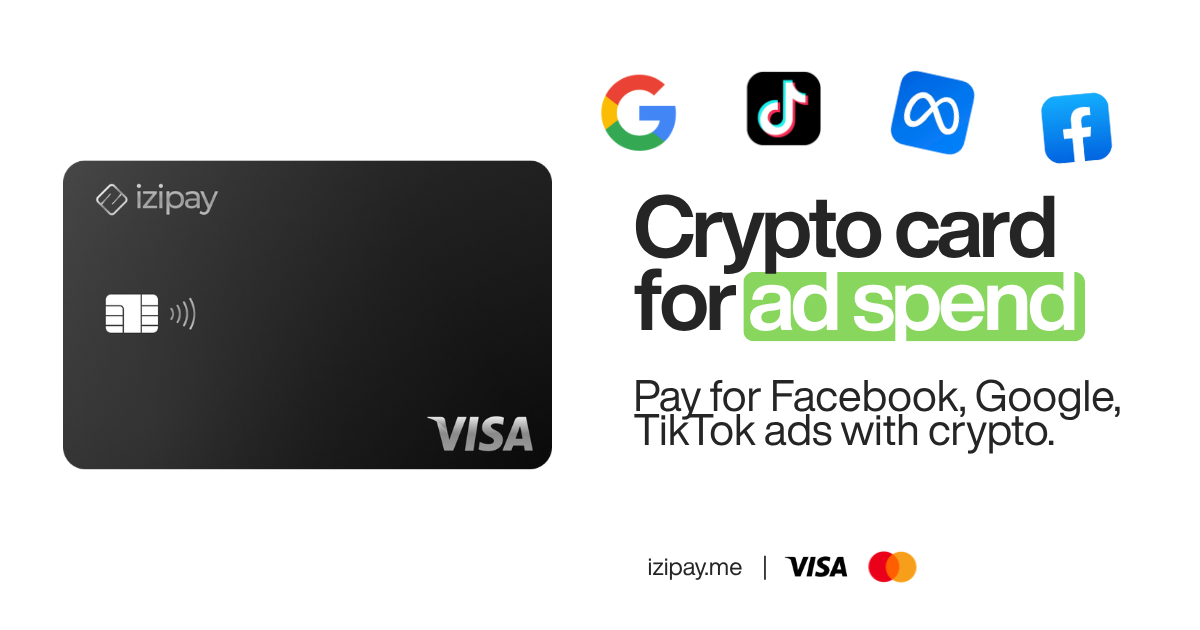
Best Crypto Card for Online Shopping & Everyday Spending (2026)
You hold your money in USDT or BTC, but the internet still runs on Visa. Amazon wants a card. Netflix wants a card. That boutique marketplace, your cloud host, the food-delivery app - all of them want a 16-digit number, not a wallet address. So the real question for anyone living on crypto isn't "who accepts Bitcoin?" It's: what is the best crypto card for online shopping and everyday spending?
This guide answers exactly that. We'll show you how a crypto-funded Visa card works, where you can actually spend it, what the fees and limits look like, and why a no-KYC option like IZIPAY has become the go-to pick for people who want to spend crypto online without handing their identity to yet another platform.
Why you need a crypto card for spending
Only a tiny slice of online merchants accept crypto directly, and most that do route you through a clunky checkout with volatile pricing and long confirmation waits. Meanwhile, 99% of the web accepts Visa. A crypto card bridges that gap: you keep your balance in stablecoins or Bitcoin, and the card converts it to a normal card payment at the exact moment of purchase.
That means no more:
- Selling crypto on an exchange, waiting for a bank transfer, then paying.
- Getting declined because a merchant "doesn't do crypto."
- Exposing your main bank account to every subscription and one-off store.
- Watching a checkout timer expire while a Bitcoin transaction confirms on-chain.
Instead you get one balance that spends everywhere - the definition of a good crypto card for everyday spending. Your USDT stops being an asset you have to "cash out" and becomes money you simply use.
How a crypto Visa card works
The mechanics are simpler than most people expect:
- Sign up with just an email - no ID upload for standard limits.
- Issue a virtual Visa card in a couple of minutes.
- Fund it with crypto by sending USDT, BTC or ETH to your unique deposit address.
- Spend anywhere Visa is accepted - the card debits your balance and settles the purchase in the merchant's currency.
Behind the scenes, your crypto is converted at the point of sale, so the store only ever sees an ordinary Visa transaction. There's no "crypto" flag on the payment for a merchant's fraud engine to reject. You can read the full walkthrough in our guide on how to use a virtual crypto card.
Where you can actually spend it
The whole point of a virtual crypto card for shopping is that it behaves like any other card. In practice that covers almost everything you buy online:
- Marketplaces & retail: Amazon, eBay, AliExpress, Etsy and thousands of independent Shopify and WooCommerce stores.
- Subscriptions: streaming (Netflix, Spotify, YouTube Premium), software (Adobe, Notion, Microsoft 365), cloud and hosting.
- Travel & delivery: flights, hotels, ride-hailing and food-delivery apps.
- Digital services: AI tools, VPNs, domains, ad platforms and freelancer marketplaces.
If a site takes Visa, your crypto card works there. And because it's a commercial-grade Visa rather than a low-tier prepaid product, it clears fraud checks on picky merchants far more reliably. Big retailers and subscription platforms run every card through a risk score; a premium BIN passes where cheap prepaid cards get silently rejected. If you're unsure about a specific site, our note on whether you can use a crypto card online covers the edge cases.
Add it to Apple Pay and Google Pay
A card that only lives online is only half the story. Once your virtual card is issued, you can add it to Apple Pay or Google Pay and tap to pay in physical stores, in apps, and at any contactless terminal.
That turns your crypto balance into genuine everyday money: coffee, groceries, transit, in-app purchases - all funded by the USDT sitting in your wallet, with no plastic to carry and no bank in the middle. For a lot of users this is the moment a "crypto card" stops feeling like a workaround and starts feeling like their main way to pay.
Fees, limits and what to watch for
The best card for you is the one whose costs match how you spend. With IZIPAY the model is deliberately simple:
- One-time card issue fee, then no monthly maintenance fees - you're not paying just to keep the card alive.
- A small top-up fee when you add crypto to your balance.
- No hidden FX surprises on standard purchases.
You can see the current numbers on the pricing page. A few tips that apply to any crypto card:
- Keep a buffer. Fund a little above your purchase total so taxes, shipping or a service fee don't tip you into a decline.
- Match the network. Send USDT on the network shown for your deposit address to avoid stuck transfers.
- Use per-purpose cards. Issue separate virtual cards for subscriptions vs. one-off shopping to keep spending tidy and cancel any single card instantly.
- Mind the limits. No-KYC cards carry standard spending limits that are generous for everyday shopping; if you spend at high volume, spread it across multiple cards.
Crypto card vs. traditional debit card
Why not just use a normal bank debit card? For crypto holders, three differences matter:
- Funding source. A bank card draws on fiat you'd have to move onto crypto rails and back. A crypto card spends the USDT or BTC you already hold, directly.
- Privacy. A bank card ties every purchase to your legal identity and banking history. A no-KYC crypto card keeps your shopping separate from your primary financial footprint.
- Access. Opening a bank account can be slow or impossible depending on where you live. A crypto card takes minutes and needs nothing but an email and a wallet.
For anyone who earns, saves or holds in crypto, the crypto card removes the constant round-trip through a bank.
No-KYC: privacy that actually matters
Most "crypto cards" quietly require full identity verification - passport, selfie, proof of address - which defeats the point of using crypto in the first place. A no-KYC virtual card lets you sign up with an email and start spending, so your purchases aren't tied to a bank identity or exchange account.
For standard spending limits, IZIPAY issues virtual Visa cards with no invasive ID checks. Your shopping stays your business, and your main funds never touch the merchants you buy from. If a subscription service is breached tomorrow, the only thing exposed is a single-purpose virtual card you can cancel in a tap - not your bank account.
Why IZIPAY is our pick for online shopping
Putting it together, here's why IZIPAY tops our list for a crypto card for spending in 2026:
- No KYC for standard use - email sign-up, minutes to your first card.
- Fund with USDT, BTC or ETH from any wallet or exchange.
- Commercial-grade Visa BIN that clears checkout on demanding merchants.
- Apple Pay & Google Pay support for in-store and in-app taps.
- Issue multiple cards from one crypto balance to organize your spending.
- Transparent, no-monthly-fee pricing.
It's built for exactly the use case most crypto holders have: spend the balance you already own, everywhere you already shop, without a bank looking over your shoulder.
Getting started in five minutes
- Register on izipay with your email.
- Issue a virtual Visa card.
- Send USDT (or BTC/ETH) to your deposit address.
- Add the card to Apple Pay or Google Pay if you want to tap in stores.
- Start shopping - Amazon, subscriptions, marketplaces, anywhere Visa is accepted.
That's the entire flow. No exchange cash-outs, no bank, no waiting. Just your crypto, spending online like normal money - which is exactly what the best crypto card for everyday spending should feel like.
Ready to spend crypto online the easy way? Grab a no-KYC virtual Visa card and turn your USDT balance into everyday spending power today.