The Technical War of Wallets: Apple Pay vs Google Pay Security 2026
IZIPAY Technical Analysis Team | Published Jan 25, 2026
As we navigate the fiscal landscape of 2026, the physical leather wallet has become an endangered species. Mobile payment systems now handle over 75% of retail transactions in major urban hubs. However, as the volume of digital spending increases, so does the sophistication of cyber-attacks. For users of IZIPAY Virtual Cards, choosing between an iPhone or an Android device isn't just a matter of brand loyalty—it is a choice between two fundamentally different security philosophies.
This article provides an exhaustive deep-dive into the tokenization protocols, hardware isolation, and privacy trade-offs that define the 2026 mobile payment experience.
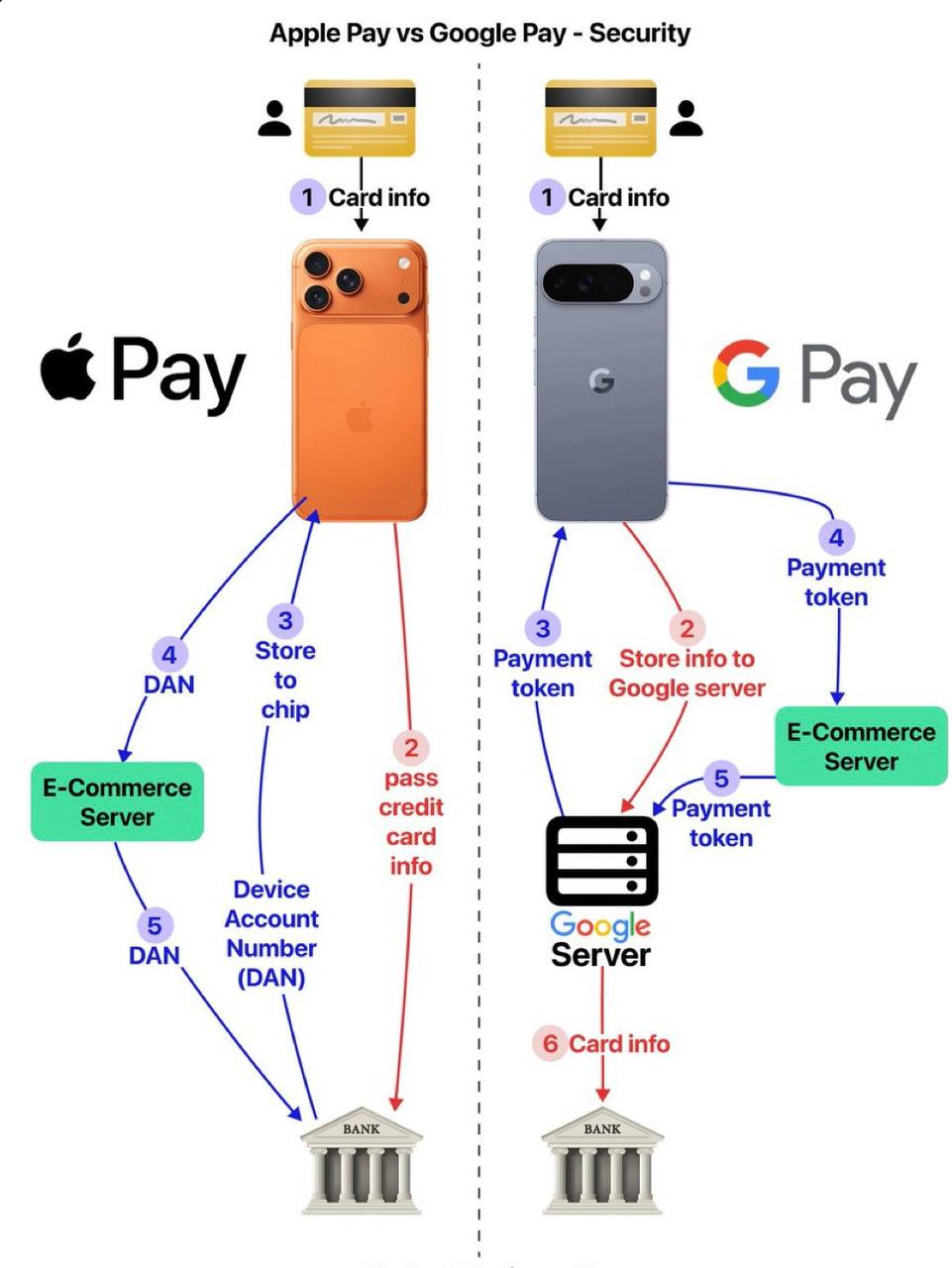
Figure 1: Visualizing the hardware-gapped security of Apple versus the cloud-integrated flexibility of Google.
Apple Pay vs Google Pay Tokenization: Secure Element vs Cloud
At the heart of every contactless "tap" is a process called Tokenization. This technology ensures that your actual 16-digit Primary Account Number (PAN) is never transmitted to the merchant or stored on the device. Instead, a one-time-use digital "token" is shared. However, the location where these tokens are generated and stored represents the primary technical divide between Apple and Google.
1. The Hardware Fortress: Apple’s Secure Element (SE)
Apple’s security model is built on physical isolation. As detailed in the official Apple Platform Security Whitepaper, iPhones utilize a Secure Element (SE). This is a dedicated, certified chip designed specifically to store payment information and execute cryptographic operations.
- Isolation: The SE is separate from the main processor. Even if the iOS kernel is compromised by a zero-day exploit, the attacker cannot "read" the data inside the SE.
- No Cloud Sync: Apple does not sync your card details to the cloud. If you get a new iPhone, you must manually re-add your cards, ensuring that your sensitive data never resides on a server.
- NFC Handshake: During a transaction, the SE provides the token directly to the Near Field Communication (NFC) controller. The main operating system never "sees" the raw payment data.
2. The Software Agility: Google’s Host Card Emulation (HCE)
Google Pay takes a more flexible approach to accommodate the thousands of different Android hardware configurations. As outlined in the Google Pay Security Documentation, they primarily utilize Host Card Emulation (HCE).
- Cloud Management: Payment tokens are often managed via Google’s secure servers. This allows Google Pay to function on devices that lack a dedicated Secure Element chip.
- TEE Integration: In 2026, premium Android devices use a Trusted Execution Environment (TEE). While not a separate physical chip like Apple's, it is a secure area of the main processor that handles sensitive tasks.
- Flexibility: Because the logic is software-based, Google can update security protocols and add features (like QR code payments for global markets) much faster than hardware-locked systems.
Why Crypto Users Choose Virtual Cards
Regardless of the hardware, the ultimate security layer is a disposable balance. By using the IZIPAY Virtual Card registration, users load only the USDT needed for a specific trip or purchase. This "air-gaps" your primary crypto savings from the mobile wallet entirely.
Biometric Entropy and Authentication in 2026
Hardware is only half the battle; the other half is Identity. In 2026, "knowledge-based" security (passwords and PINs) is considered obsolete. Both platforms have shifted toward advanced biometrics.
Face ID vs. Android Biometric API
Apple Pay mandates Face ID or Touch ID for every transaction. There is no "unlocked" state that stays active; the user must be present for every tap. Apple’s Face ID uses 30,000 infrared dots to map facial depth, boasting a 1-in-1,000,000 false-positive rate.
Google Pay leverages the Android Biometric API, which allows for different tiers of security. While convenient, some budget Android devices use 2D camera-based face unlock, which is significantly less secure than 3D depth mapping. For high-value IZIPAY Virtual Card transactions, we always recommend using a fingerprint sensor or 3D face unlock if your Android device supports it.
Merchant-Side Security: The End of Skimming
One of the biggest wins of 2026 is the near-elimination of physical card skimming. When you use Apple or Google Pay, the merchant receives a Dynamic Security Code. Unlike the 3-digit CVV on the back of your physical card, this code changes for every single transaction.
If a hacker breaches a merchant's database (like a hotel or airline) and steals the transaction logs, the tokens they find are useless. They cannot be used to initiate a second transaction because the dynamic code has already expired. This makes mobile wallets mathematically superior to physical plastic cards.
The Privacy Trade-Off: Data vs. Privacy
The final pillar of the 2026 debate is data privacy. Apple has built its brand on Differential Privacy. They do not know what you bought, where you bought it, or how much you paid. The transaction history is stored locally on your device, not on Apple’s servers.
Google’s business model is fundamentally different. While the payment data is encrypted, Google’s servers handle the transaction flow, which gives them access to high-level metadata. This data is often used to feed into Google’s "Smart Loyalty" programs, which automatically apply coupons and rewards at checkout. For many, the convenience is worth the data trade-off; for others, the IZIPAY No-KYC Virtual Card is the only way to ensure their spending habits remain their own business.